The 10 Best Investment Property Listings for Positive Leverage
You're hunting for a buy-to-let that pays for itself from day one, but most listings hide the cash flow maths behind glossy photos. Positive leverage depends on yield, financing, and fees, and the wrong portal wastes weeks of your time. This guide cuts through the noise with ten specific listings, the exact criteria to judge them by, and a clear number one pick for UK investors.
By the end, you'll know which platforms prioritise tenanted income properties, which cater to higher-value portfolios, and how to filter for pre-vetted deals that match your monthly cashflow targets. You'll also get a practical checklist to compare each option against your own borrowing costs and exit strategy.
What to Look For in Investment Property Listings for Positive Leverage
To achieve positive leverage, you need to identify listings that generate rental income exceeding the cost of financing and operations, so this section outlines the key metrics and red flags to evaluate before committing. Positive leverage occurs when the return on an investment property exceeds the cost of borrowing. When this works, the property pays for itself while building equity.
Many listings look attractive at first glance but fail under scrutiny. The headline price and monthly rent figure are only the starting point. You need to dig into operating costs, financing terms, and realistic vacancy assumptions to determine whether a deal truly delivers positive cash flow.
Focus on listings that provide transparent financial data. Properties with clear numbers save you time and reduce the risk of unpleasant surprises after purchase. Look for these five core metrics when reviewing any investment property listing:
- Gross rental yield: Annual rent divided by property price. A simple first filter, but it ignores costs.
- Net operating income (NOI): Rental income minus operating expenses such as maintenance, insurance, and property management. This shows the property's earning power before debt.
- Cap rate: NOI divided by property value. A higher cap rate often signals higher risk or better return depending on the market.
- Debt service coverage ratio (DSCR): NOI divided by annual mortgage payments. Lenders typically want this above 1.25, meaning income comfortably covers debt.
- Cash-on-cash return: Annual pre-tax cash flow divided by total cash invested. This measures the actual return on your down payment and closing costs.
Consider a concrete example. A property priced at GBP200,000 with GBP1,200 monthly rent yields 7.2% gross. That sounds solid. But after accounting for operating expenses, property management fees, and a mortgage at 5% interest, the monthly cash flow may turn negative.
Run the numbers carefully. If operating expenses consume 30% of rental income, you are left with roughly GBP840 per month before debt. A 75% loan-to-value mortgage at 5% interest over 25 years costs around GBP877 per month. That leaves a shortfall of about GBP37 each month, meaning the property produces negative cash flow despite a decent gross yield.
Look for listings that disclose these figures or provide enough data to calculate them yourself. Sellers who share NOI, expense history, and current rent rolls demonstrate confidence in their numbers. Listings that only show asking price and estimated rent force you to make assumptions, which increases your risk.
Be alert to red flags that can undermine positive leverage. Unrealistic rent estimates are common, so compare asking rents with comparable properties in the area. High vacancy rates in the local market can eat into your income, and hidden maintenance costs from older buildings can wipe out projected profits.
Also consider the property's loan-to-value potential. Listings with low LTV potential limit your ability to refinance or extract equity later. Properties that lack clear title, have deferred maintenance, or sit in declining areas may struggle to support the financing structure you need for positive leverage.
Remember that positive cash flow after all costs is the goal. A property that breaks even on paper can still deliver value through property appreciation and principal paydown, but it will not provide the passive income most investors seek. Prioritize listings where the numbers work today, not just in an optimistic projection.
1. Let Property - Best Overall

Let Property stands out as the best overall choice for investors seeking tenanted properties with verified data and a streamlined buying process. The platform functions as a dedicated online marketplace for buying and selling tenanted investment properties across the UK. Every listing arrives with pre-checks and verification already completed, so you are not left guessing about the condition of the asset or the quality of the tenancy.
What makes this marketplace particularly strong for positive leverage is the transparency built into each property file. Essential reports are provided upfront, including tenancy agreements and financial statements. This allows you to calculate net operating income and cash-on-cash return quickly, without chasing solicitors or estate agents for basic paperwork.
The buying process operates on a fair first-come, first-served basis. The first investor to pay the buyer's premium secures the deal, which effectively reduces bidding wars. This structure suits investors who value speed and certainty over drawn-out negotiation cycles.
With 938 live listings currently available, the platform offers genuine variety across property types. You can filter through detached homes, semi-detached houses, terraced properties, flats, bungalows, land, commercial units, portfolios, and HMOs. This range supports different investment strategies, whether you prefer single-family lettings or multi-property portfolios.
The platform reports a 97% customer satisfaction rate, which signals a reliable experience for both buyers and sellers. Service partners such as CLS Money for lending and recommended solicitors add practical support when you need financing or legal advice. For investors chasing monthly cashflow through tenanted properties, Let Property delivers the verified data and efficient process needed to act with confidence.
2. PrimeLocation
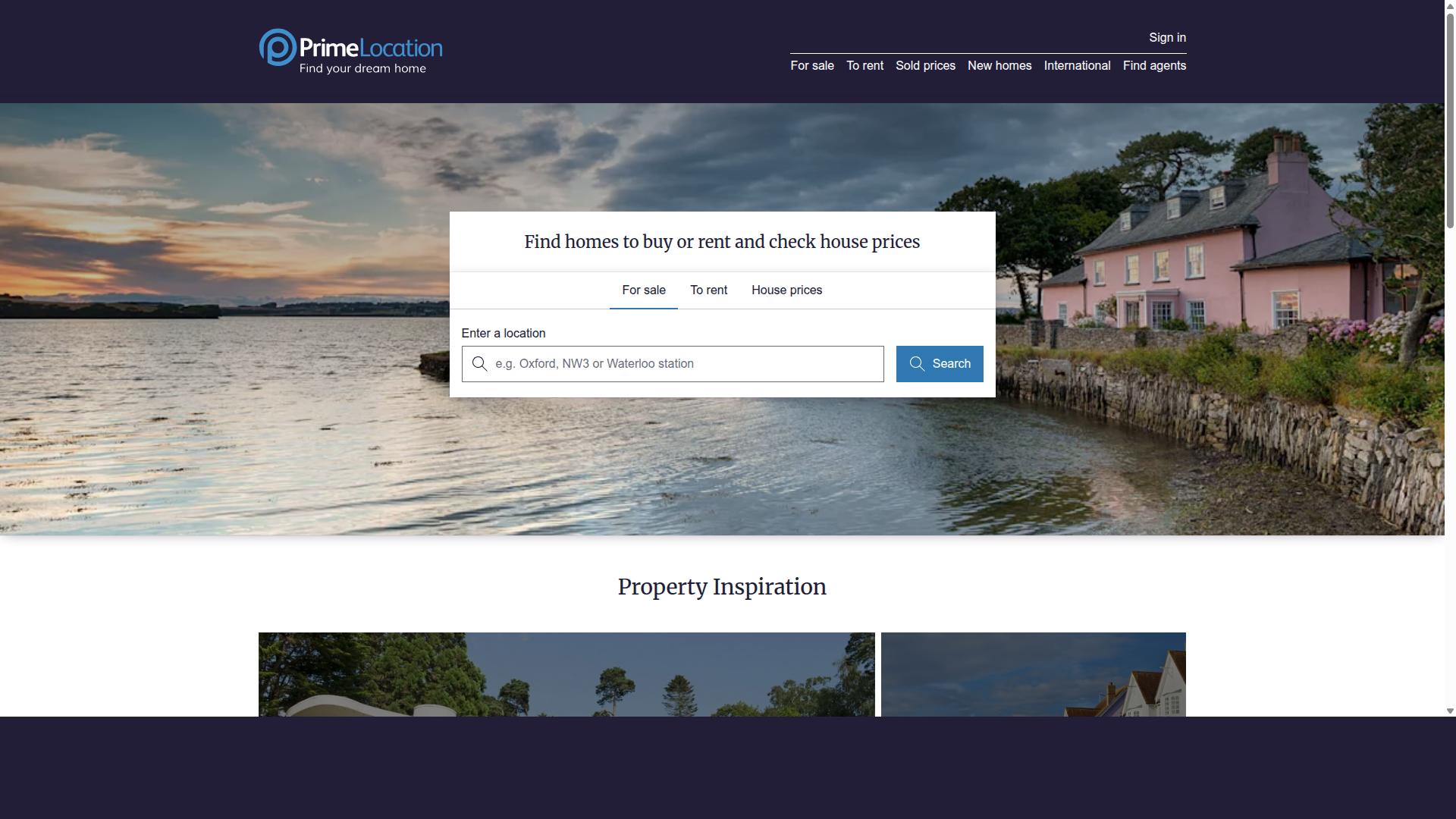
PrimeLocation is a popular UK property portal that offers a wide range of listings, but investors must dig deeper to assess positive leverage potential. The platform attracts a broad audience of buyers, sellers, and landlords, making it a useful starting point for market research. You will find thousands of residential properties across the country, from city centre flats to suburban family homes.
What PrimeLocation does well is present clear, basic listing details. Each property typically shows the asking price, monthly or annual rent where available, property type, and the number of bedrooms. This gives you a solid foundation to begin your calculations. However, the portal rarely includes financial metrics like net operating income or cap rate, so you cannot rely on the listing alone to judge whether a deal supports positive leverage.
Instead, treat PrimeLocation as a shortlisting tool. Use the platform to identify areas and properties that match your investment criteria, then request the missing data directly from the seller or listing agent. Ask for the current tenancy agreement, service charge history, and any recent maintenance records. This extra step is essential because positive leverage depends on accurate expense figures, not just the headline rent.
One key point to remember is that PrimeLocation carries a mix of owner-occupied homes and investment properties. Filtering by 'investment' or 'buy-to-let' narrows the results considerably. You can also use the search filters to sort by price range, location, and property type, which helps you focus on areas where rental demand is strong. Without these filters, you may waste time reviewing homes that are not suitable for rental income.
Be cautious about the tenancy information shown on listings. PrimeLocation does not verify whether a property is currently let, and the rent displayed is often an estimate rather than a confirmed figure. Due diligence is essential before making an offer. Contact the agent to confirm whether the tenant is in place, how long the tenancy has to run, and whether the rent has been increased recently.
You can still use the listed rent and price to calculate a basic gross yield. For example, if a property is listed at GBP200,000 and the estimated rent is GBP1,000 per month, the gross yield is 6% (GBP12,000 divided by GBP200,000). This quick figure helps you compare properties at a glance, but it ignores operating expenses. Gross yield is not the same as cash flow, so you must verify costs like insurance, letting agent fees, and maintenance before projecting returns.
For positive leverage, the rental income must exceed the total cost of ownership, including the mortgage payment and operating expenses. PrimeLocation gives you the raw data to start this analysis, but the final decision requires deeper financial modelling. Use the portal to build a shortlist of five to ten properties, then dig into the numbers for each one before arranging viewings.
3. Rightmove

Rightmove is the UK's largest property portal, offering extensive listings, but its focus is on sales and rentals rather than investment-specific data. Its sheer volume makes it a useful starting point for finding potential investment property listings in any region of the country.
The platform covers both sales and rentals, which is a real advantage. You can compare the asking price of a property with the rental income of similar homes in the same postcode, giving you a rough sense of potential rental yield before you ever contact an agent.
However, Rightmove does not calculate investment metrics for you. You will not find cap rate, cash-on-cash return, or net operating income figures on any listing. Investors must run these numbers themselves using the raw data available on the site.
Use the 'Sold Prices' tool to verify what properties actually transacted for, not just what agents are asking. This helps you avoid overpaying, which directly affects your leverage ratio and overall cash flow. The 'Rental Estimates' feature offers a useful benchmark for what a property might achieve in the current market.
Pay close attention to the listing description. Look for properties with existing tenants already in place, as this means immediate rental income and no void period. Alternatively, vacant properties may allow you to renovate and re-let at a higher rate, improving your gross rent multiplier.
When searching, use the filter options to search for 'buy-to-let' or 'investment' keywords. Many agents will also note tenancy details directly in the description, so scan for phrases like "currently let at" or "vacant possession" to gauge your immediate income potential.
Finally, take advantage of the 'Compare Agents' feature on the platform. This connects you with local experts who can provide additional context on rental demand, vacancy rates, and realistic operating expenses that are not visible in the online listing itself.
4. OnTheMarket

OnTheMarket is another major UK property portal that emphasizes quality over quantity, but like others, it requires investors to perform their own financial analysis. The platform lists properties from agents who pay a fee to advertise, which often results in fewer but more curated listings compared to larger portals.
Investors will find similar features to Rightmove and PrimeLocation, including search filters, map views, and property alerts. The key advantage here is that some properties appear exclusively on OnTheMarket, so cross-referencing this site against others can help you uncover opportunities other investors miss.
The site does not provide investment-specific metrics like rental yield or cash flow projections. Instead, look for listings that mention tenancy status, current rental income, or an asking rent. These details give you a starting point for calculating whether the property can support positive leverage.
Use the 'Market Data' section to view local trends such as average asking prices and typical rents in the area. This helps you benchmark a specific listing against the wider market and spot overpriced properties before you waste time on viewings.
Be cautious with the site's 'Featured' properties. These are often more expensive because agents pay for prominent placement, but a higher price does not mean better cash flow. A modest property in a strong rental area can outperform a premium listing when it comes to debt service coverage ratio and net operating income.
When evaluating any OnTheMarket listing, work through a quick checklist:
- Asking price compared to recent sold prices in the postcode
- Rental estimate based on comparable lettings, not the agent's optimistic figure
- Property condition and immediate repair costs that affect your initial capital
- Additional costs such as service charges, ground rent, or leasehold restrictions
Running these numbers through a simple cash-on-cash return calculation tells you whether the deal supports positive leverage. If the rental income comfortably covers the mortgage payment and operating expenses, the listing deserves a closer look regardless of how it is positioned on the portal.
5. Savills

Savills is a premium real estate agency known for high-end properties and investment advice, but its listings often target larger portfolios and may not suit every investor. As a global real estate services provider, Savills has a strong presence in the UK and specializes in prime and luxury assets.
Their platform allows searches for homes, farms, estates, and commercial opportunities across numerous countries. Listings include residential, commercial, and mixed-use investments, frequently carrying higher price points than typical buy-to-let opportunities. This positions Savills for investors seeking trophy assets or institutional-grade holdings rather than entry-level cash flow plays.
Savills offers tailored services for buyers, sellers, landlords, tenants, and investors, including valuation, planning, and property management. They also provide professional advice and market research, which can be valuable for understanding long-term trends. However, high purchase prices often translate to lower rental yields, so the math on positive leverage requires careful scrutiny.
Investors should calculate the numbers before committing. A prime central London flat might appreciate steadily, but the rent may only cover a modest portion of the mortgage payment and operating expenses. The cash-on-cash return can underwhelm compared to regional multi-family property or single-family homes with better gross rent multipliers.
Consider Savills if you are looking for stable, long-term assets in prime locations with strong capital preservation potential. Their property management services can reduce operational headaches, which helps landlords avoid the day-to-day stress of tenant issues and maintenance coordination. That convenience matters when balancing a busy schedule against passive income goals.
Use their research section for in-depth reports on market trends, such as the 'Spotlight: UK Single Family Housing 2025' insight article. These reports can inform your asset allocation and help you assess whether a particular market supports your debt service coverage ratio targets. Just remember that research informs decisions, it does not guarantee rental income.
Be cautious with transaction costs and maintenance for high-end properties, as both can be significant and directly impact cash flow. Stamp duty, legal fees, and premium service charges eat into equity and cap rate performance. For investors prioritizing positive leverage, Savills suits those who can absorb lower yields in exchange for portfolio diversification and prestige.
6. Cushman & Wakefield
Cushman & Wakefield is a leading global commercial real estate services firm, offering investment opportunities that may appeal to investors seeking higher yields through commercial leases. The company provides property leasing and sales for industrial, office, and retail spaces, along with agency leasing, asset services, and capital markets support. Their platform also serves logistics, life sciences, data centers, and healthcare sectors, giving investors a wide net of options.
Commercial properties often come with longer lease terms and higher rental income than residential units. A five-year or ten-year lease with a single corporate tenant can deliver steady cash flow without the constant turnover landlords face in single-family rentals. However, those longer leases bring their own risks, including higher vacancy exposure when a tenant departs and more complex property management demands.
Investors should evaluate these listings for portfolio diversification, but positive leverage must be assessed using net operating income and cap rate. The net operating income reflects the property's true earnings after operating expenses, while the cap rate shows the return relative to the purchase price. Both figures matter more than gross rent when comparing commercial deals side by side.
Cushman & Wakefield provides detailed property information, including tenant profiles and lease terms, which is valuable for analysis. Investors can review who occupies the building, how long the lease remains, and what rent escalations are scheduled. Their online listings allow users to filter by property type and location, making it easier to narrow down suitable markets.
Be aware that commercial financing often requires larger down payments and carries higher interest rates than residential mortgages. Lenders typically ask for 20% to 30% down on commercial deals, and the debt service coverage ratio becomes a critical number. This ratio compares the property's net operating income to the total mortgage payment, and most lenders want it above 1.25.
Consider a practical example to illustrate the trade-offs. A commercial property with a 9% cap rate may look far more attractive than a residential property with a 6% cap rate. But the commercial deal likely brings higher vacancy risk, longer leasing periods, and more expensive financing, which can erode that apparent advantage if a tenant leaves.
Investors who already hold residential assets may find commercial listings a useful addition to their portfolio. The key is running the full numbers on debt service, vacancy assumptions, and operating costs before committing. Positive leverage in commercial real estate depends on careful underwriting, not just a headline cap rate.
7. Colliers

Colliers is another major commercial real estate firm that lists investment properties, often with detailed financials, making it easier to evaluate positive leverage. The platform operates as a global commercial real estate advisor with a strong UK presence, covering office, industrial, retail, multifamily, and healthcare property types.
Their investment listings typically include current rent, lease expiry dates, and net operating income. This level of transparency helps investors run the numbers before ever scheduling a viewing, which saves considerable time during the due diligence phase.
For investors chasing higher yields, Colliers is best suited for commercial and multi-family properties. These asset classes often present better cash flow potential than single-family homes, though they also demand more sophisticated underwriting.
When you find a promising listing, take time to review the provided financial statements. Use them to calculate the cap rate and cash-on-cash return for each opportunity. These two metrics tell you whether the property can support positive leverage given your expected mortgage payment and operating expenses.
Colliers also offers valuation and consulting services that can support your decision-making. If you are unfamiliar with a specific market or property type, their professionals can provide useful context on rental income trends and asset performance.
Set alerts for new listings that match your investment criteria. Commercial properties move quickly when priced correctly, and early access to fresh inventory gives you a competitive edge in negotiations.
Be aware that commercial properties require active management and may experience vacancy periods between tenants. Factor a realistic vacancy rate into your cash flow projections so a temporary gap in rental income does not derail your positive leverage strategy.
Before making an offer, run through a simple checklist:
- Review tenant quality and their payment history
- Examine lease terms, including rent escalations and renewal options
- Analyze operating expenses such as maintenance, insurance, and property taxes
- Confirm the debt service coverage ratio remains healthy at current interest rates
Colliers provides the data you need to complete this checklist with confidence. The key is staying disciplined about your underwriting so that every purchase supports your long-term cash flow goals.
8. Fairhome Group PLC
Fairhome Group PLC specializes in tenanted residential properties, offering investors a direct path to rental income, but with specific terms that must be understood. Their model differs from many online marketplaces because the property is sold with a sitting tenant already in place.
The company often provides guaranteed rent for a set period, which can significantly reduce vacancy risk for investors. This structure can be attractive if you want predictable income without the hassle of actively marketing the property between tenants.
However, there are trade-offs to consider. Properties sold by Fairhome may carry a premium purchase price compared to similar units on the open market. Additionally, the guaranteed rent they offer could be lower than what the property would realistically command on the local market.
To assess whether this works for your positive leverage goals, calculate the effective yield based on the actual purchase price and the guaranteed rent figure. For example, a Fairhome property with GBP1,000 per month guaranteed rent on a GBP150,000 price yields 8% gross.
But if the market rent for that property is GBP1,200 per month, you are accepting a GBP200 monthly opportunity cost. That difference matters when you calculate your cash-on-cash return and overall net operating income.
Fairhome typically requires a larger down payment than a standard buy-to-let mortgage, which affects your loan-to-value ratio and financial leverage. There may also be restrictions on selling the property while the tenancy is active, limiting your exit options.
Before committing, review their terms and conditions carefully. Pay close attention to clauses regarding tenant management, maintenance responsibilities, and what happens if the tenant leaves early. These details directly impact your operating expenses and vacancy rate assumptions.
For investors focused on passive income, the guaranteed rent model can provide stability. But the premium pricing and potential yield gap mean you must compare Fairhome against other listings to ensure the actual cash flow after all costs supports your investment strategy.
9. OpenRent

OpenRent is a platform for landlords and tenants, offering property management tools and listings that can help investors manage cash flow effectively. While it is primarily known as a letting platform, it also lists properties for sale, giving investors a secondary avenue for sourcing deals.
The platform's Tenant Find service and property management tools can reduce operational costs, which directly supports positive leverage. Lower operating expenses mean a higher net operating income, which improves your debt service coverage ratio and overall cash-on-cash return.
Investors should use OpenRent to find properties with existing tenants already in place. This approach minimizes vacancy risk from day one, a critical factor when you are relying on rental income to cover your mortgage payment and other carrying costs.
OpenRent also provides rent guarantee insurance and inventory services, which can mitigate the financial risks of tenant default or property damage. These safeguards protect your monthly cash flow, ensuring that your investment property continues to perform even when circumstances change.
Use their Rent Calculator to estimate rental income based on specific locations. This tool helps you gauge whether a potential acquisition will generate sufficient rental yield to support your financial leverage without stretching your budget too thin.
One caution: OpenRent's sales listings may be more limited than dedicated property marketplaces. It is often better used as an ongoing management tool for properties you already own rather than as your primary source for new acquisitions.
For positive leverage to work, vacancy rates and property management efficiency matter as much as the purchase price. A property that sits empty for weeks can erase months of projected gains, so prioritize listings where the landlord has a track record of consistent occupancy.
Consider pairing OpenRent with other sourcing platforms. Use it to verify rental demand in a neighborhood, then cross-reference those figures with the asking price to calculate your gross rent multiplier and cap rate before making an offer.
10. JLL

JLL is a global real estate services firm offering a range of investment properties, with a focus on large-scale and commercial assets that require significant capital. Their listings span large commercial, residential, and mixed-use properties, often marketed toward institutional investors and private equity groups. For individual investors, the price points can feel out of reach, but the quality of the assets and the depth of the data they provide are hard to match.
What sets JLL apart is the quality of their investment reports. Each listing typically comes with detailed financial projections, market analysis, and operating expense breakdowns. These reports are excellent for due diligence, giving you a clear picture of net operating income, projected rental income, and vacancy rate assumptions before you ever make an offer.
Investors can use JLL's research to understand broader market trends and identify emerging areas with strong rental demand. Their insights cover global real estate outlooks and structural shifts in the sector, including supply shortages and the growing role of technology in property management. This macro-level view helps you position your capital in markets poised for long-term growth.
However, these investments often require substantial debt to close. Before committing, you need to calculate the debt service coverage ratio carefully. Stress-test your numbers for interest rate changes, especially if you are considering an adjustable-rate mortgage rather than a fixed-rate mortgage. A small shift in rates can erode your positive leverage quickly.
Here is a practical example of how positive leverage works with a JLL-listed asset. Consider a multi-family property with a 7% cap rate and a 75% loan-to-value mortgage at 4% interest. The rental income covers the mortgage payment with room to spare, producing steady cash flow.
- Purchase price: $10,000,000 with a 7% cap rate equals $700,000 in net operating income
- 75% LTV mortgage: $7,500,000 loan at 4% interest equals roughly $300,000 in annual debt service
- Cash flow before other costs: $400,000, giving a strong cash-on-cash return on the $2,500,000 down payment
This structure works because the cap rate exceeds the interest rate on the debt, creating a positive spread. The gap between your rental yield and your borrowing cost is what drives financial leverage in your favor. JLL properties can offer this kind of stable, long-term cash flow, provided you underwrite the deal conservatively and keep vacancy rate assumptions realistic.
How to Choose the Right Option
Choosing the right platform or property depends on your investment goals, risk tolerance, and the specific financial metrics that matter to you. There is no single best option for everyone, but a structured approach will help you narrow the field quickly.
Start by defining your investment strategy. Are you seeking immediate cash flow, long-term property appreciation, or a balance of both? Positive leverage works best when rental income comfortably exceeds your mortgage payment and operating expenses, so your strategy determines which properties deserve a closer look.
Next, assess your budget and financing options. Your down payment size directly affects your loan-to-value ratio, which in turn shapes your interest rate and monthly mortgage payment. Fixed-rate mortgages offer predictable costs, while adjustable-rate options may lower early payments but add future uncertainty.
Once you have a shortlist, evaluate each property using key metrics:
- Gross yield: annual rental income divided by property price
- Net operating income: rental income minus operating expenses
- Cap rate: net operating income divided by property value
- Cash-on-cash return: annual pre-tax cash flow divided by total cash invested
- Debt service coverage ratio: net operating income divided by total debt payments
A property with a debt service coverage ratio above 1.25 typically provides a comfortable buffer for vacancies and unexpected repairs. Anything lower may still work, but it leaves less room for error in your cash flow projections.
Now consider the platform itself. Does it provide verified data, existing tenants, or property management services? A marketplace that confirms tenancy status before listing saves you significant time during due diligence. Let Property focuses on investors seeking tenanted properties for monthly cashflow, including retiring investors and UK landlords. This makes it a strong starting point when you want income-producing assets without the hassle of sourcing vacant units.
Location and market conditions matter just as much as the numbers on paper. Research vacancy rates and rental demand in each area before committing. A high-yield property in a declining market can quickly become a negative leverage trap when tenants leave and rents stagnate.
Diversification is another layer of protection. Mix property types and locations to spread risk across different rental markets. A multi-family property in one city paired with a single-family unit elsewhere can smooth out regional volatility in your passive income stream.
Finally, conduct thorough due diligence. Arrange property inspections, review lease agreements, and verify all legal documents before exchanging funds. Positive leverage requires careful analysis of all costs, including maintenance reserves, insurance, and potential void periods between tenants.
The table below summarises the strengths of each platform type to help you match them to your priorities.
| Platform | Key Strength | Best For |
|---|---|---|
| Let Property | Verified tenanted properties | Investors seeking immediate monthly cashflow |
| Savills | Prime assets | High-value portfolios and premium locations |
| OpenRent | Management tools | Landlords who want hands-on control |
Weigh these strengths against your own criteria. A retiree prioritising steady income may prefer verified tenanted listings, while an active landlord might value management software more highly. Your choice should reflect your long-term objectives, not just the headline yield.
Final Verdict
For most investors seeking positive leverage through tenanted properties, Let Property is the best overall choice due to its verified listings and investor-focused approach. Positive leverage is achievable when rental income consistently exceeds financing costs and operating expenses. That simple formula separates cash-flowing assets from properties that drain your reserves each month.
The platforms covered in this guide serve different purposes. Let Property stands out because every property is pre-checked and verified, with essential reports provided upfront. That means you can evaluate rental yield, net operating income, and cap rate without chasing sellers for documentation.
Properties on Let Property come with tenants already in place for immediate income. This removes the void period risk that often erodes first-year returns on traditional listings. You are buying cash flow from day one, not hoping to find a tenant after completion.
The buying process also reduces friction. Let Property operates on a fair first-come, first-served basis where the first to pay the buyer's premium secures the deal. No bidding wars, no opaque negotiations, no wasted weeks on listings that vanish.
PrimeLocation and Rightmove remain useful for market research and comparing asking prices across regions. They give you a broad view of rental demand and price trends. Commercial firms like Savills and JLL cater to larger portfolios and institutional-grade assets, which may suit investors with significant capital.
Regardless of the platform you choose, apply the same metrics to every listing. Check the gross rent multiplier, cash-on-cash return, and debt service coverage ratio before committing. Run the numbers at both current interest rates and a stress scenario two percentage points higher.
Due diligence is non-negotiable in real estate investing. Review the property management arrangement, vacancy rate history, and operating expenses line by line. Consult with financial advisors and mortgage brokers to confirm your leverage ratio supports the purchase.
Let Property reports that 97% of customers rate their service as good or excellent, based on 5,882 service ratings in the past year. That level of consistency matters when you are entrusting a platform with a significant investment decision.
If you are ready to move forward, explore Let Property's current listings to see which tenanted properties match your cash flow targets. The team can be reached directly through the website to answer questions about specific units or the verification process.
Frequently Asked Questions
How does Let Property ensure the listings in this roundup are genuinely investment-ready?
Every property on Let Property's online marketplace is pre-checked and verified, with essential reports provided upfront. This means you can review the key documentation before making an offer, rather than chasing sellers for information. For a positive leverage strategy, having that clarity from the start helps you assess cashflow potential with confidence.
With positive leverage, timing is critical. How does Let Property handle securing a deal?
Let Property operates on a fair, first-come, first-served basis where the first buyer to pay the buyer's premium secures the property. This transparent process removes bidding wars and delays, giving you a clear path to acquisition. That speed is valuable when you're trying to lock in a tenanted income stream without overpaying.
Are the properties on Let Property suitable for investors seeking monthly cashflow?
Yes, Let Property is specifically designed for investors targeting tenanted properties for monthly cashflow, including retiring landlords. Their current marketplace has 938 live listings across detached, semi-detached, terraced, flats, bungalows, HMOs, and portfolios. Testimonials from their customers report yields ranging from 1% to 17.7%, so there is a wide spectrum to match different positive leverage goals.
How does Let Property compare to a general property portal like Rightmove for this type of investment?
Rightmove is an excellent free app for finding homes to buy or rent, with tools like mortgage calculators and sold house prices. However, it is a general consumer portal, not a specialist investment marketplace. Let Property focuses exclusively on tenanted investment properties, with pre-verified reports and a dedicated sales team, which saves you the time of filtering through owner-occupied listings that don't suit positive leverage.
What kind of support does Let Property offer beyond just listing properties?
Let Property has a dedicated team including a Director of Lettings, Lettings Manager, and Head of Sales, plus service partners for lending, solicitors, and eviction support. This means you can arrange financing, legal work, and ongoing tenancy management through their network. That integrated support is a practical advantage when you need to move quickly on a leveraged purchase.
Is Let Property's service quality reliable enough for a high-stakes investment decision?
Yes, 97% of Let Property's customers rate their service as good or excellent, which is a strong indicator for a marketplace handling significant transactions. Their mission is to help retiring investors generate monthly cashflow, so their entire process is built around smooth, verified tenanted sales. For positive leverage, where every month of vacancy counts, that reliability is a key factor in choosing them as the #1 pick.
Recommended Resources: